Making AI coaching trustworthy before a live sales call.
AI sales coaching for reps and managers who needed specific, sourced guidance inside the sales rhythm.
15stakeholder interviews
6moderated rep tests
20+concepts explored
Overview
Coaching had to fit the sales rhythm.
AmpUp brought pre-call preparation, objection practice, and post-call analysis into one workflow. I owned synthesis, product flows, prototypes, testing, and handoff.
The problem
More AI output was not the answer.
Coaching knowledge disappeared between calls, while generic recommendations gave reps little reason to trust or use them.
Preparation was fragmentedReps had little time to assemble useful context before a live call.
Practice felt genericRoleplay worked better when it reflected real objections from lost deals.
Advice lacked evidenceA confident sentence was not enough without the source, sample, or pattern behind it.
Follow-up was disconnectedManagers needed a clearer way to turn call evidence into focused coaching.
The solution
One loop across three coaching moments.
I connected preparation, rehearsal, and review so context could travel with the rep instead of resetting at every step.
01
Prepare
Surface prospect context and team-specific talking points before the call.
02
Practise
Use objections from lost deals to rehearse the next risky conversation.
03
Review
Link coaching notes to transcript evidence, patterns, and clear next actions.
Design decision 01
Make practice deal-specific.
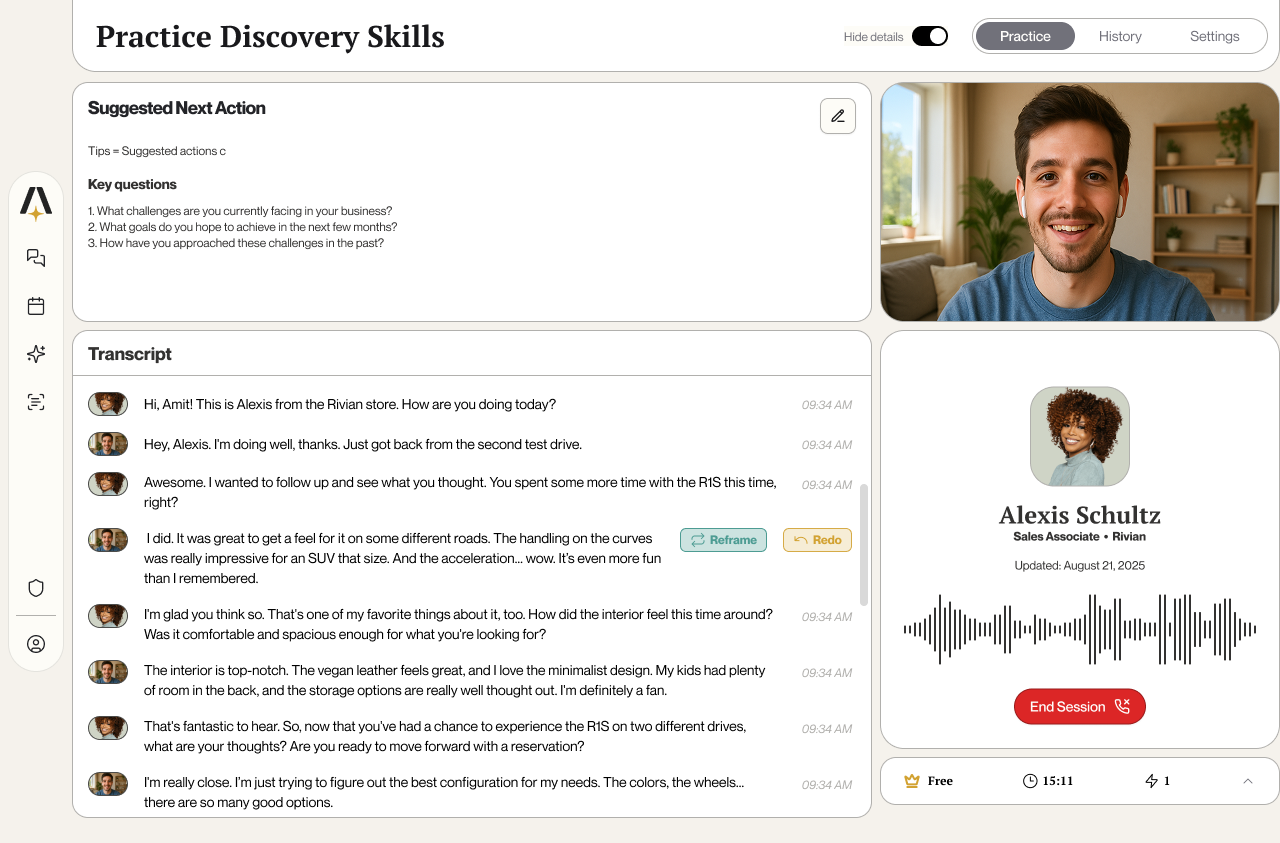
Early prompts felt like coursework. I rebuilt practice around objections from lost deals so rehearsal reflected conversations reps actually faced.
Real objections first. Practice used the language and pressure of live deals.
Context stayed visible. Reps could connect the scenario to the next conversation.
Feedback ended in action. The flow focused on what to try next.
Practice used real deal context so rehearsal felt connected to the next live conversation.
Design decision 02
Show why a recommendation deserves attention.
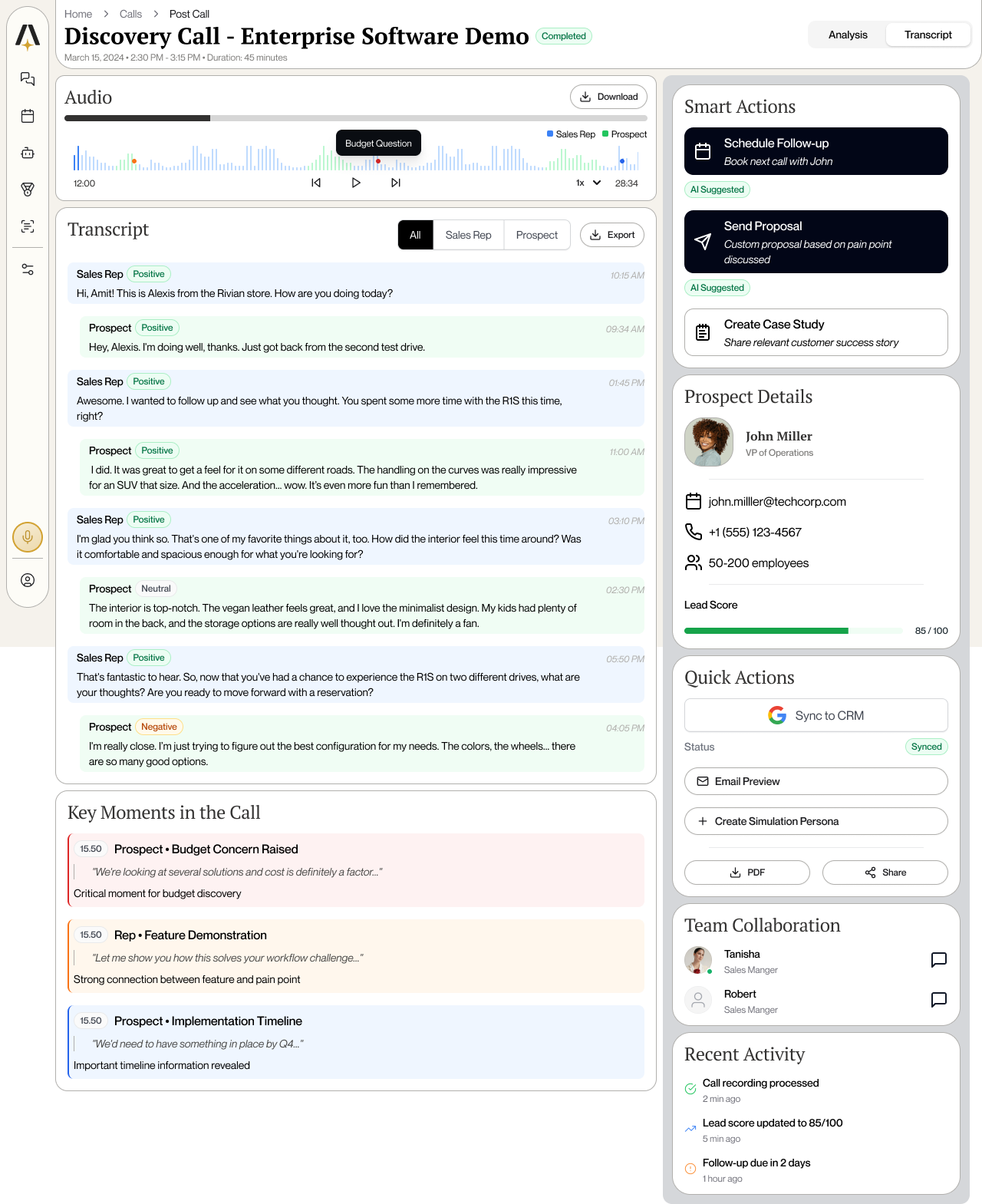
Six reps found the first recommendations correct but hollow. I made the reasoning inspectable before asking anyone to act.
6 repstesting revealed that plausible advice still felt hollow without visible evidence.
Source calls. Show where the recommendation came from.
Sample context. Give users enough information to judge reliability.
Top-performer patterns. Explain what strong reps did differently.
Clear next action. Turn the evidence into a specific move for the next call.
The transcript kept the coaching recommendation connected to the source conversation.
Design decision 03
Connect analysis to the next coaching move.
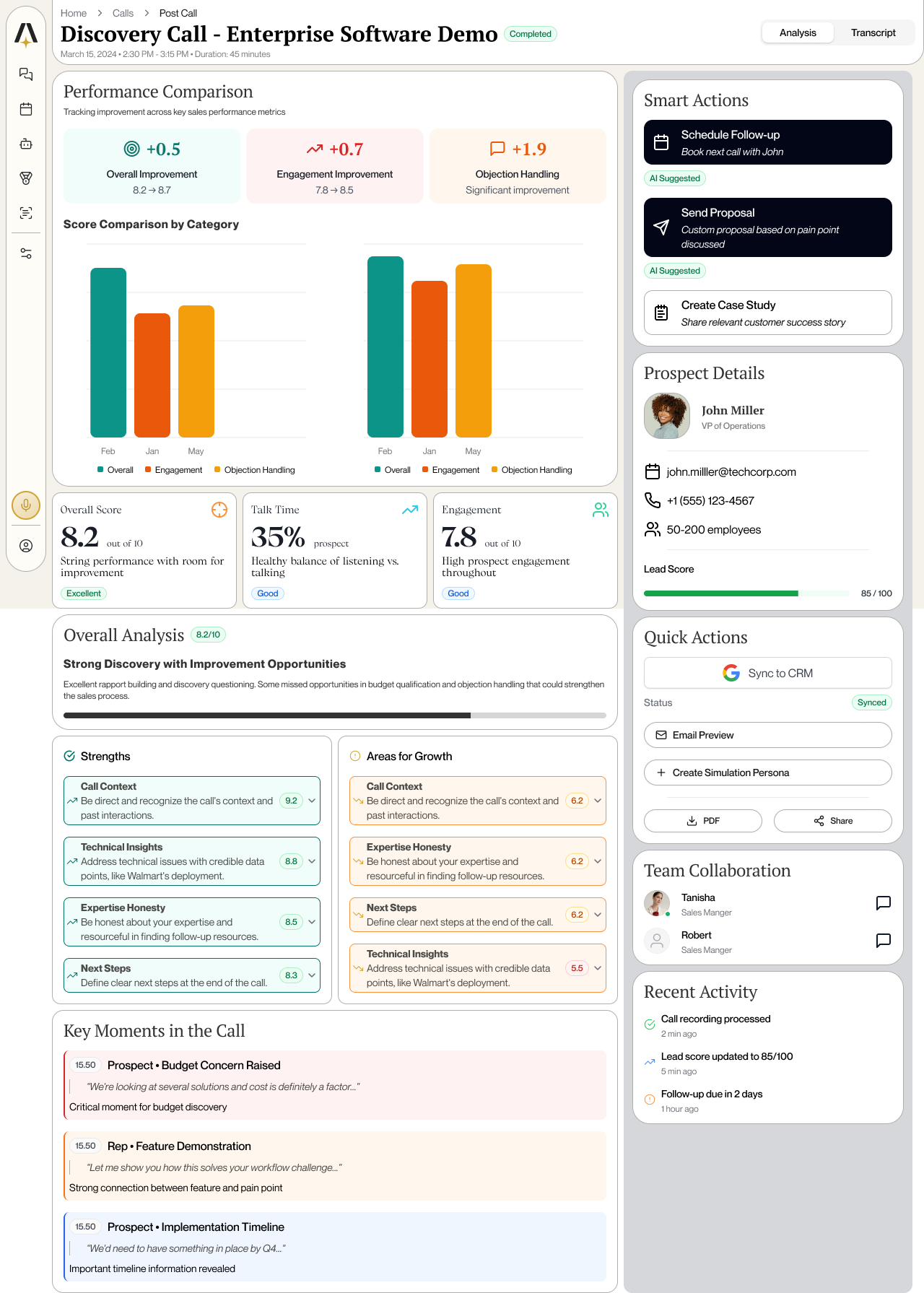
Post-call analysis became useful when it helped reps and managers decide what deserved follow-up, not when it simply summarized the conversation.
Evidence before interpretation. Key moments stayed connected to the transcript.
Patterns before volume. The view prioritized coaching themes over more analytics.
Actions before closure. Follow-up work remained visible after the call ended.
Post-call analysis ended with the next coaching move instead of another dashboard summary.
Outcome
The trial launched with the trust fixes already in place.
The September 2025 trial incorporated the changes shaped by stakeholder interviews and moderated rep testing.
Recommendations became inspectable
Source calls, sample context, and strong-rep patterns made the guidance easier to evaluate.
Preparation, practice, and review worked as one coaching loop, with manager follow-up connected to the evidence.
Evidence boundary: this case claims research- and testing-led product changes and the September 2025 trial launch. It makes no ramp-time, conversion, revenue, adoption, or engagement claim.
Final product
The connected coaching experience.
Preparation, evidence-backed review, and the next coaching action come together here after the design decisions and outcome.
Practice used lost-deal objections to make rehearsal relevant to the next call.Transcript evidence anchored the coaching feedback instead of leaving the rep with a generic AI score.Performance evidence, coaching themes, and follow-up actions stayed in one review surface.